
Why Is My Machinery Vibrating Excessively? Common Causes Explained
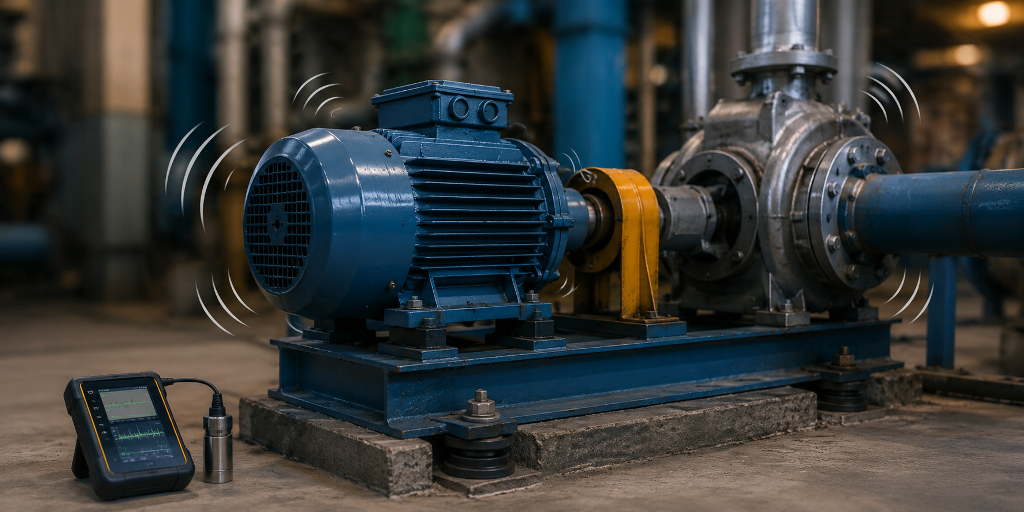
Excessive machinery vibration is more than an annoying noise or movement. In industrial environments, abnormal vibration can be an early warning sign of mechanical problems that may reduce equipment performance, damage components, increase maintenance costs, and eventually lead to unexpected downtime.
Machines such as motors, pumps, compressors, generators, CNC machines, fans, and other industrial equipment naturally produce some vibration during operation. The problem begins when vibration becomes unusually strong, changes suddenly, or is transferred excessively into the machine frame, floor, or surrounding structure.
Understanding the common causes of excessive machinery vibration can help maintenance teams identify problems early and determine whether adjustment, repair, balancing, alignment, or suitable anti-vibration mounts may be required.
What Is Machinery Vibration?
Machinery vibration is the repetitive movement or oscillation of a machine or one of its components around its normal position.
A certain amount of vibration is expected from equipment containing rotating or reciprocating parts. However, excessive vibration may indicate that the machine is no longer operating under its intended mechanical conditions.
Common warning signs include:
- Increased shaking during operation
- Unusual humming, rattling, or knocking noises
- Vibration felt through the floor or nearby equipment
- Loose nuts, bolts, or fittings
- Reduced machining accuracy
- Premature bearing or component wear
- Cracks around mounting points
- Increasing vibration as machine speed changes
Ignoring these symptoms can allow a relatively small mechanical problem to develop into a much more expensive failure.
- Rotating Component Imbalance
Imbalance is one of the most common causes of vibration in rotating machinery.
It occurs when the mass of a rotating component is not distributed evenly around its axis. As the component rotates, the uneven mass produces centrifugal force, causing vibration.
Imbalance may affect:
- Fans
- Blowers
- Motors
- Pumps
- Rotors
- Pulleys
- Flywheels
- Industrial spindles
Common reasons include dirt accumulation, manufacturing variations, damaged blades, component wear, or incorrectly fitted replacement parts.
How Can It Be Fixed?
The rotating assembly should be inspected, cleaned where necessary, and professionally balanced. Anti-vibration mounting can help isolate residual vibration, but it should not be treated as a substitute for correcting serious mechanical imbalance.
- Shaft or Coupling Misalignment
Two connected rotating components must normally operate with their shafts correctly aligned.
If a motor and pump, for example, are not properly aligned, additional forces can develop during rotation.
Misalignment may be:
- Angular
- Parallel
- Axial
- A combination of different alignment errors
Poor alignment can increase vibration while also accelerating wear on bearings, couplings, and seals.
Correct shaft alignment is therefore an important part of machinery installation and preventive maintenance.
- Worn or Damaged Bearings
Bearings are critical components in rotating machinery. When they become worn, damaged, contaminated, or poorly lubricated, vibration levels can increase significantly.
Potential bearing problems include:
- Insufficient lubrication
- Excessive lubrication
- Contamination
- Corrosion
- Incorrect installation
- Fatigue
- Excessive operating loads
- Normal wear over time
Bearing-related vibration should be investigated quickly because continued operation can potentially damage shafts and other connected components.
- Loose Machine Components
Mechanical looseness can create severe vibration even when the main rotating components are operating correctly.
Common examples include loose:
- Foundation bolts
- Mounting bolts
- Motor feet
- Bearing housings
- Machine guards
- Base plates
- Couplings
- Structural supports
A loose connection allows components to move more than intended. The movement may then amplify the vibration generated by the machine.
Regular inspection of mounting points and fasteners can help prevent this problem.
- Incorrect or Damaged Anti-Vibration Mounts
Anti-vibration mounts are designed to reduce the transmission of vibration between machinery and its supporting structure.
However, vibration isolation performance can be reduced when the mounts are incorrectly selected, incorrectly installed, overloaded, chemically degraded, or simply worn out.
Common problems include:
- Mounts that are too stiff
- Mounts that are too soft
- Uneven load distribution
- Incorrect mount positioning
- Rubber cracking or deterioration
- Oil or chemical contamination
- Excessive compression
- Mounting bolts incorrectly installed
- Using the wrong mount for the machine’s operating conditions
Selecting the correct mount requires consideration of machine weight, number of mounting points, load per mount, operating speed, vibration frequency, environmental conditions, and required isolation performance.
For more information, see our guide on how to choose the right anti-vibration mount for your machinery.
- Poor Machinery Foundation
A machine can be mechanically sound and still vibrate excessively if its foundation or supporting structure is unsuitable.
Problems may include:
- Uneven flooring
- Weak foundations
- Flexible supporting structures
- Poor anchoring
- Cracked concrete
- Insufficient structural stiffness
- Incorrect machine levelling
Heavy industrial equipment generally requires a stable supporting surface. Where vibration isolation is required, suitable machinery anti-vibration mounts or levelling feet can help provide controlled support while reducing vibration transmission.
- Resonance
Resonance can cause surprisingly high vibration levels.
Every mechanical system has one or more natural frequencies. If the operating or excitation frequency of a machine approaches one of these natural frequencies, vibration can become significantly amplified.
This means a relatively modest vibration source can create a much larger response in the machine, frame, pipework, or building structure.
Possible solutions may involve changing operating speed, increasing structural stiffness, changing mass, adding damping, or selecting an isolation system with suitable characteristics.
- Bent Shafts
A bent shaft can create repetitive vibration during rotation.
Possible causes include:
- Excessive mechanical loading
- Incorrect installation
- Overheating
- Impact damage
- Previous bearing failure
- Manufacturing defects
A suspected bent shaft should be inspected using appropriate measurement techniques rather than simply replacing vibration mounts.
- Worn Belts and Pulleys
Belt-driven machinery can experience excessive vibration when belts or pulleys are worn or incorrectly adjusted.
Typical problems include:
- Incorrect belt tension
- Misaligned pulleys
- Damaged belts
- Uneven belt wear
- Worn pulley grooves
- Eccentric pulleys
These problems can create periodic vibration and noise, particularly at specific operating speeds.
- Improper Machine Levelling
Industrial machinery should normally be installed according to the manufacturer’s levelling requirements.
An incorrectly levelled machine can place uneven loads on its frame and mounting points. This may contribute to vibration, alignment problems, and reduced operating accuracy.
For applications requiring both adjustment and vibration control, appropriately selected levelling feet for machinery can help provide stable installation and controlled isolation.
- Worn Rubber Bushes
Rubber bushes are commonly used to absorb movement, reduce shock, accommodate small misalignments, and limit vibration transmission.
Over time, rubber components can deteriorate because of:
- Heat
- Oil
- Chemicals
- Ozone
- Continuous compression
- Excessive loading
- Ageing
- Harsh operating environments
Cracked, hardened, softened, or permanently deformed bushes may no longer provide their intended vibration-control performance.
- External Vibration Sources
Sometimes the machine you are inspecting is not actually generating the vibration.
Vibration can travel through floors, steelwork, foundations, pipework, and other structural connections.
Possible external sources include:
- Nearby compressors
- Generators
- Presses
- Pumps
- HVAC equipment
- Production machinery
- Heavy vehicle movement
In these situations, vibration isolation may need to be considered at the source, the receiving equipment, or both.
How Do Anti-Vibration Mounts Help?
Anti-vibration mounts are designed to reduce the amount of vibration transmitted from operating machinery into its supporting structure.
Depending on the application, different solutions may be appropriate, including:
- Rubber anti-vibration mounts
- Rubber bobbin mounts
- Machine mounts
- Rubber-to-metal bonded mounts
- Captive mounts
- Cone mounts
- Shock mounts
- Spring mounts
- Levelling feet
- Engine mounts
- Rubber bushes
The correct solution depends on the equipment and operating environment rather than simply choosing the softest available mount.
How Do You Choose the Correct Anti-Vibration Mount?
Before selecting an industrial vibration isolator, consider several important factors.
Machine Weight
Calculate the total machine weight and determine how that load is distributed across the mounting points.
Number of Mounts
Four mounting points do not necessarily mean that every mount carries exactly 25% of the total machine weight. The machine’s centre of gravity can affect load distribution.
Operating Speed
Machine RPM can help determine the primary excitation frequency and influence the required isolation characteristics.
Environmental Conditions
Consider exposure to:
- Oils
- Fuels
- Chemicals
- Heat
- Outdoor weather
- Water
- Ozone
The rubber compound and mount design should be appropriate for the actual operating environment.
Shock Loads
Machines exposed to impacts or sudden loads may require a different mounting solution from equipment producing continuous steady-state vibration.
When Should Anti-Vibration Mounts Be Replaced?
Vibration mounts should be inspected periodically rather than waiting until they completely fail.
Possible signs that replacement should be considered include:
- Cracked rubber
- Rubber-to-metal separation
- Permanent deformation
- Excessive compression
- Corrosion
- Increased machine movement
- Noticeably higher vibration transmission
- Uneven machine height
- Damaged threads or mounting hardware
The appropriate inspection and replacement interval depends on the equipment, loading, operating hours, environment, and mount construction.
Why Excessive Machinery Vibration Should Not Be Ignored
Continued excessive vibration can contribute to a chain of mechanical problems.
It may lead to:
- Bearing damage
- Fastener loosening
- Seal failure
- Shaft and coupling wear
- Reduced machine accuracy
- Increased noise
- Structural fatigue
- Shorter equipment life
- Higher maintenance costs
- Unplanned production downtime
Finding the underlying cause early is usually more effective than repeatedly replacing damaged components without addressing the source of the vibration.
Final Thoughts
If your machinery is vibrating excessively, the problem could be caused by imbalance, misalignment, worn bearings, loose components, poor foundations, resonance, damaged rubber bushes, incorrect levelling, or unsuitable anti-vibration mounts.
The first priority should be identifying the actual source of the vibration. Once mechanical faults have been addressed, correctly selected vibration-control products can help reduce the transmission of residual vibration and protect surrounding equipment and structures.
AVIP manufactures vibration-control and rubber-to-metal bonded products for a range of industrial applications in India.
Visit AVIP Rubber to explore anti-vibration solutions for industrial machinery, generators, engines, pumps, compressors, and other equipment.